Breaking Out of Old Patterns

If you’ve looked at most of my quilts on display here, you will have seen that I love free-motion quilting. I sincerely believe that the quilting design is just as important as the pieced and/or appliqued quilt top. While it does not need to be as ambitious as many of my quilt designs end up being, I would love to see all quilters stop and really think about how the overall quilting design can enhance the beautiful work they’ve created, whether they’re quilting it themselves or sending it to a professional longarmer.

I learned to free-motion quilt from taking a Craftsy.com class with Leah Day as well as watching tons of Angela Walters YouTube videos. They provided so much incredibly helpful information and inspiration, but over those first few years I found myself continuing to repeat quilting motifs and patterns I had picked up from them.

As I began creating my own quilt top designs, I realized I needed to start creating my own quilting designs as well, which I would do somewhat randomly, but I kept finding myself defaulting to the “oldies but goodies” that I had originally learned (so many swirls).

I was recently invited to join the Manhattan Quilters Guild which is such an honor. This small guild is made up of incredibly gifted quilt artists, and it has forced me to start rethinking my approach to quiltmaking. I’ve always had a bit of a loosey-goosey process, but if I really want to be taken seriously as an artist, I need to be more intentional from the beginning to the end of each quilt’s journey.

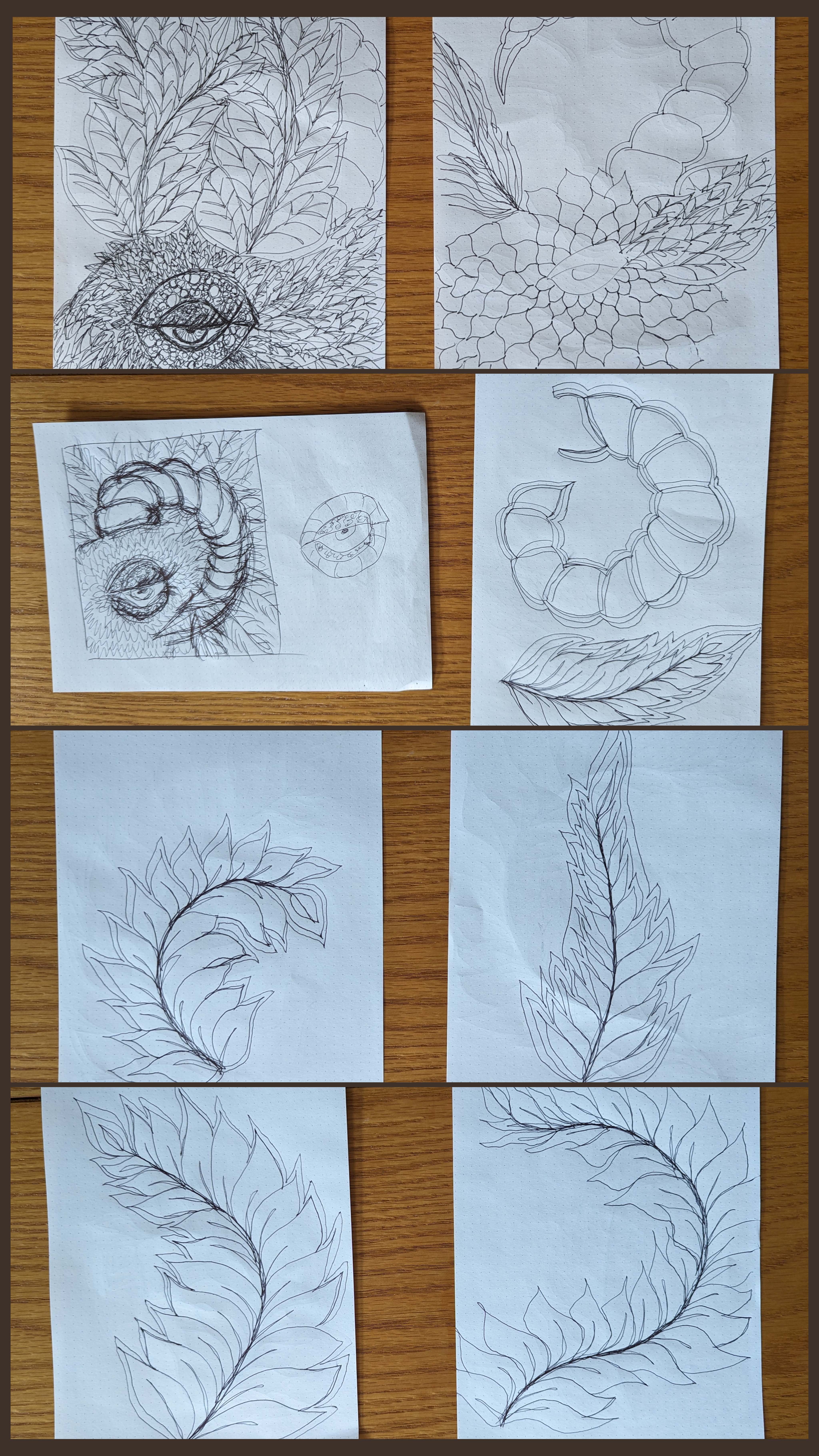
First step, sketch out ideas and just keep sketching. Work it out with paper and pen before actually sitting down at my sewing machine. (In the past, I would often just sit at my machine with a quilt sandwich under the needle as I stared and stared, trying to think of how I wanted to quilt each section.) When I’m sketching out ideas, I do it quickly and move on from each idea, reserving judgment until I’m finished with each session. The idea is not to come up with the perfect design on the first try but to just let my creative juices flow. Perfecting the idea can come later.

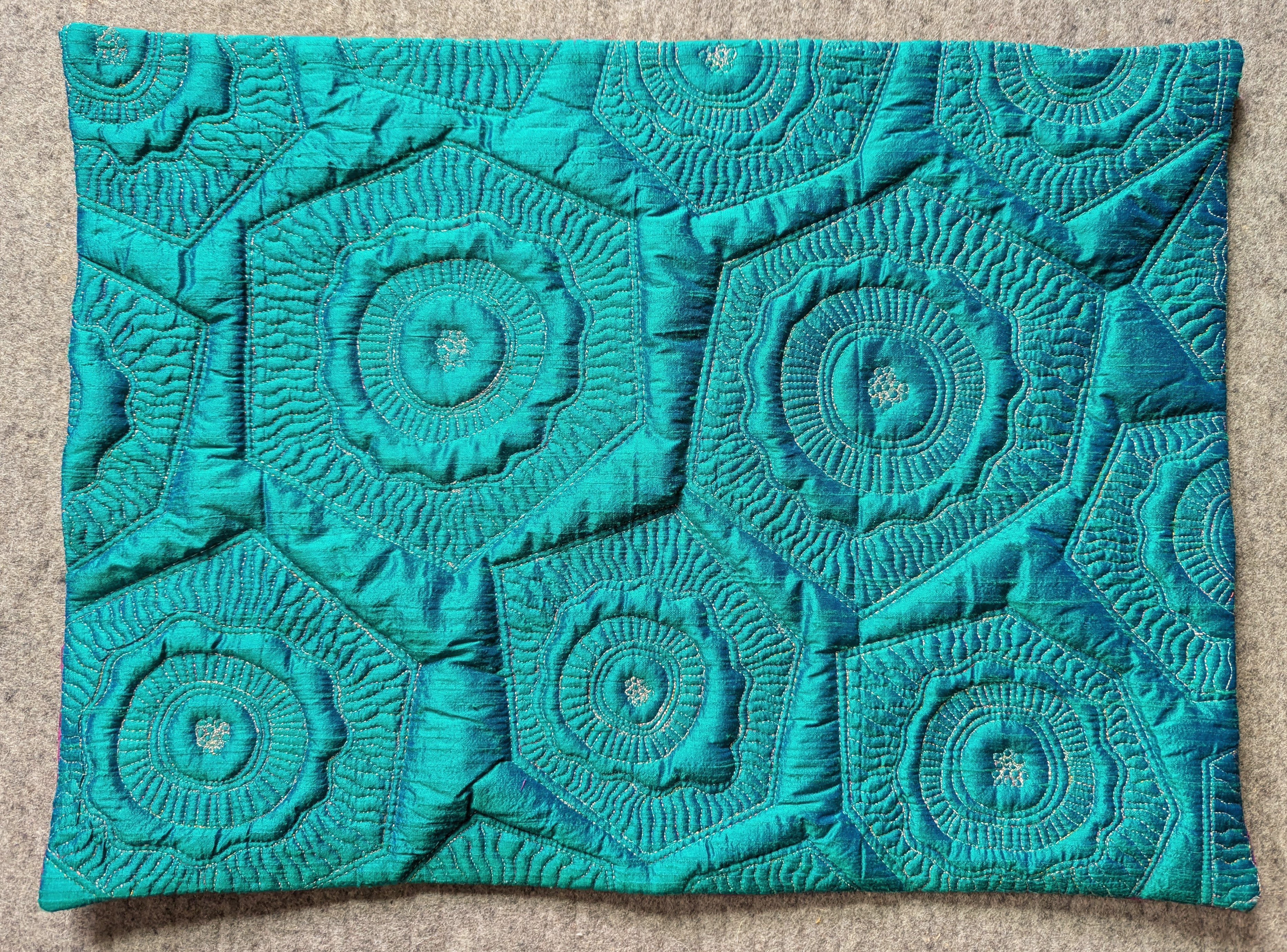
When I find some motifs that I really like, I begin practicing them with actual fabric. Sometimes I want to see how a single overall design motif would work, so I find a decent sized piece of scrap fabric, make a little quilt sandwich, and go to town. In the example below, I chose to practice a motif that involved constantly stopping, cutting thread, starting, stopping, cutting thread, etc. This is not how most free-motion quilting designs work, but I am intentionally trying to come up with completely original designs which means thinking outside of the standard FMQ parameters.
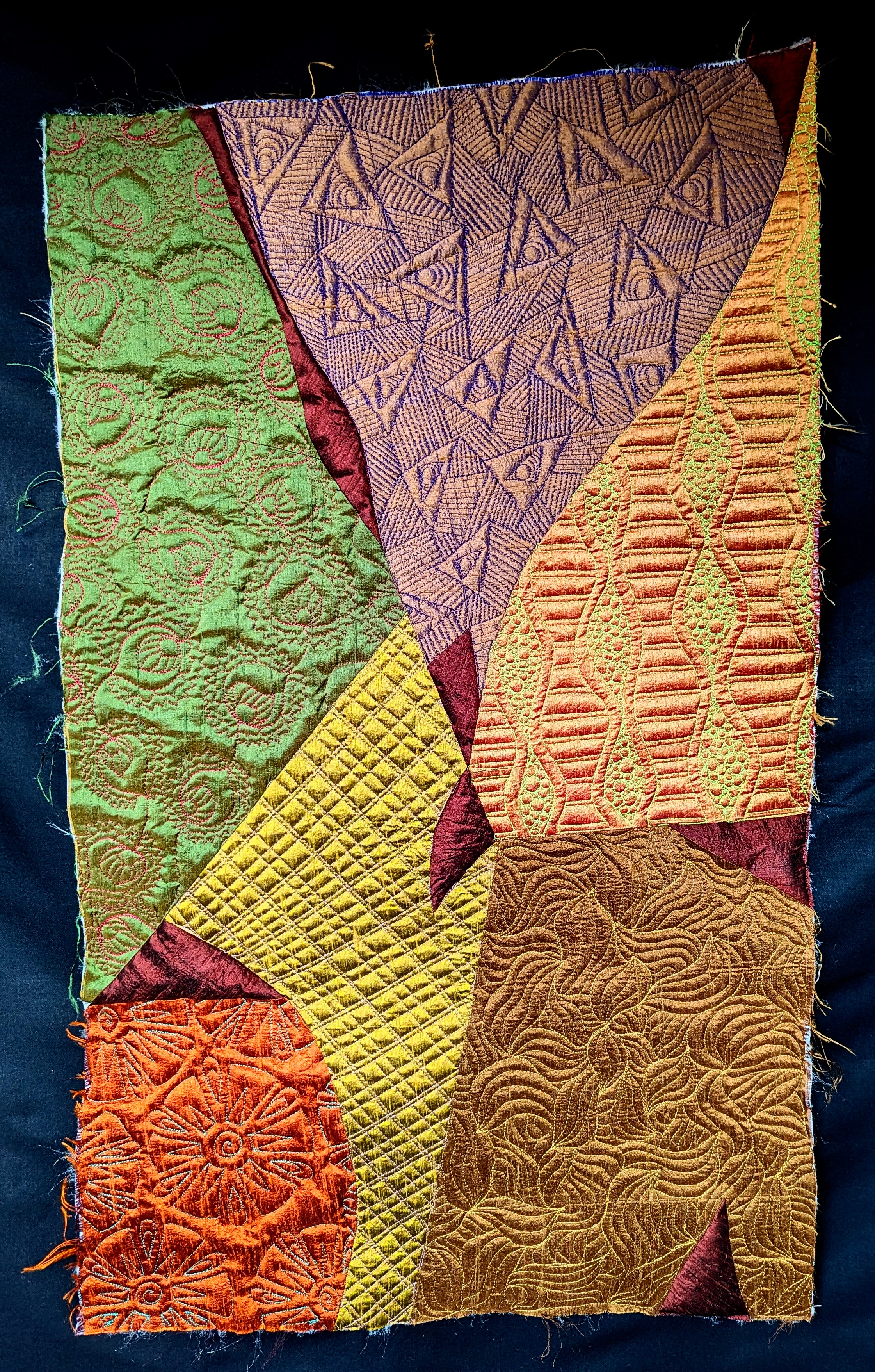
I’m also trying to be more intentional about my improv piecing, which again involves sketching first and then trying to make those sketches come to life with fabric and thread. The example below is the first of what I hope to make into a series called Patterns. I would ultimately like to create a library of these quilts from which I can draw FMQ motif inspiration for future projects.
And so my quilting journey continues. When I made my first quilt in 2017, I really didn’t see myself as a visual artist. I’m quite surprised at where this creative path is taking me, and I’m looking forward to whatever the future holds in store.

Quilting Process: Behold My Beauty and Weep

I just finished a quilt and figured I might as well blog about the process I went through to create it. Please feel free to reach out with any questions!

I belong to the Brooklyn Quilters Guild and ever since the COVID pandemic, we’ve been holding small outdoor quilt shows where we hang our quilts on the rod-iron fence that surrounds the block where we have our monthly meetings. Check out our YouTube channel to see videos of our past fence shows!

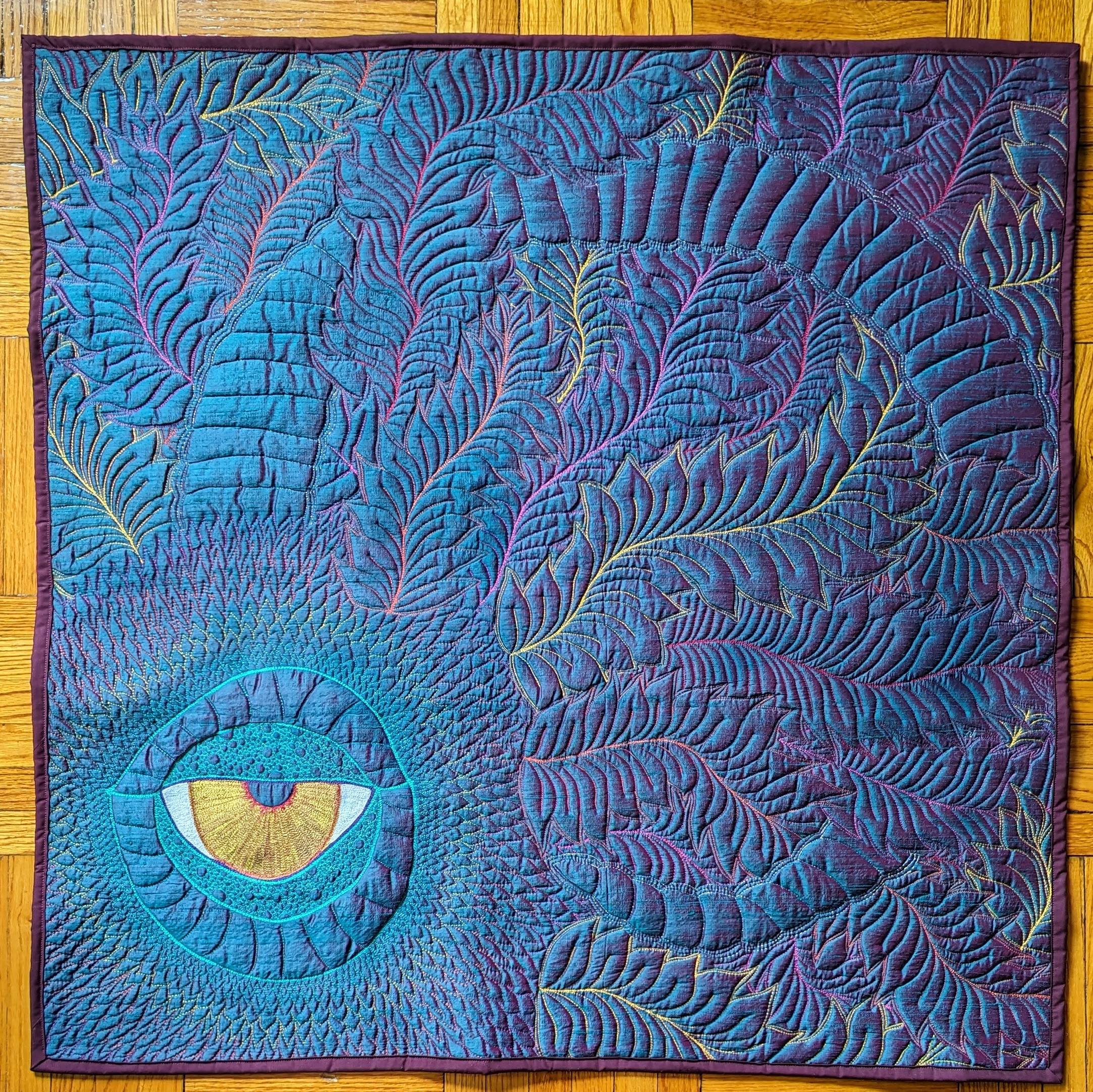
We will be having our next fence show sometime in the early fall of 2024, and the theme is The Stories We Tell: Folktales, Fantasy & Folly. I was very excited when I heard the theme because I am a huge fantasy/sci-fi fan. I immediately started thinking of whole-cloth quilt ideas with images of dragons and other mythical creatures floating in my mind. However, my drawing skills are still fairly rudimentary, and I quickly realized my ability to free-motion quilt a dragon isn’t quite there yet. So then I thought about a quilt I made in 2023 for a different guild challenge which is pictured below. The idea behind that quilt was a scaled and feathered creature staring out at the viewer.

Green fabric that has been heavily quilted to look like a large eye staring through feathers.

I had also purchased two yards of beautiful raw silk from a quilt show in the fall of 2023. I knew that was the fabric I wanted to use along with some pools of polyester thread that would shine beautifully on the finished quilt. I love free-motion quilting feathers, so I decided to do an online search for images of “feathered dragons.” The images that came up right away were Quetzalcoatl, the Mesoamerican mythological figure that is often referred to as a feathered serpent that flew through the air and provided rain for crops, among many other abilities. Using those images as my starting point, I started sketching out ideas with pen and paper until I was ready to work with my actual fabric.

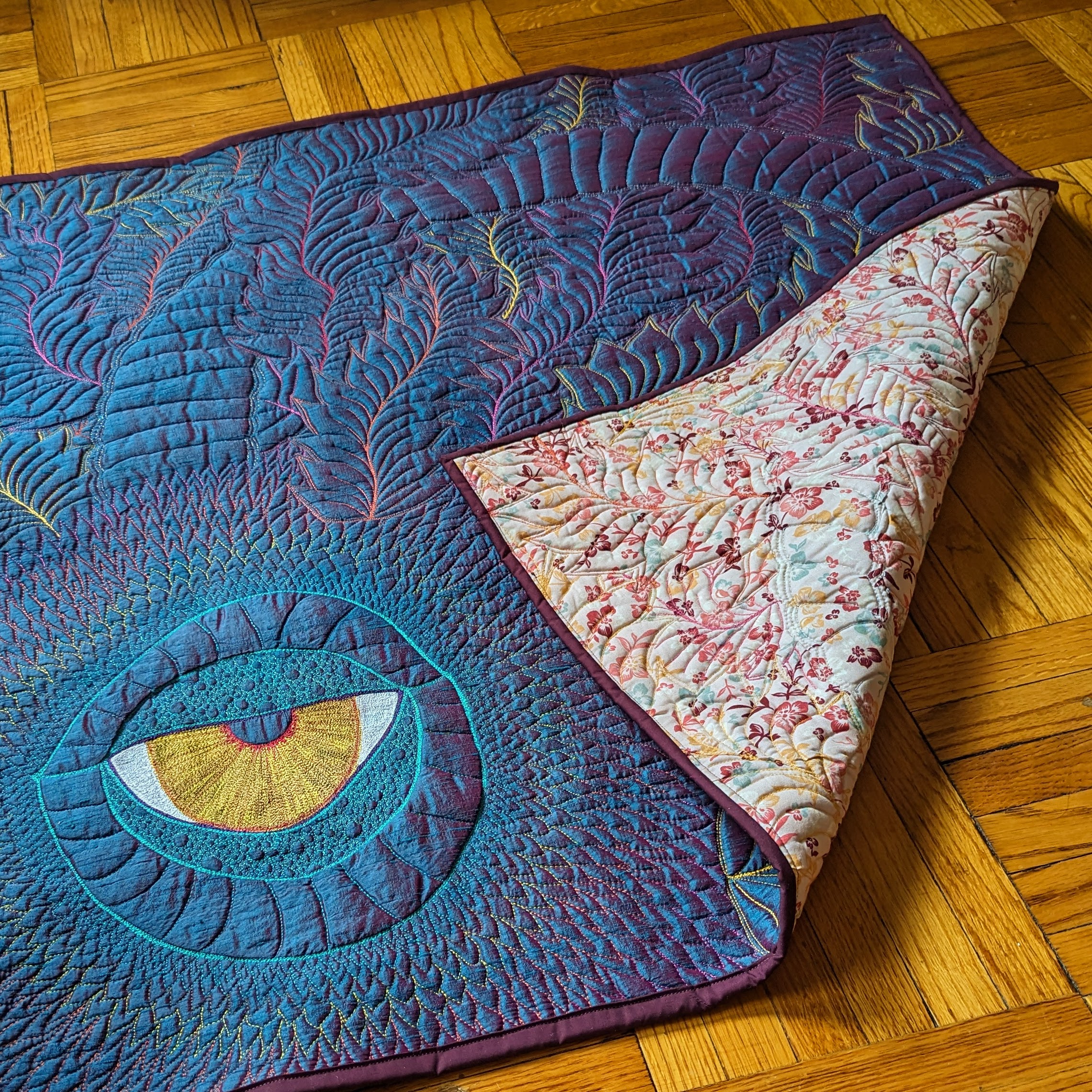
I pin basted the gorgeous raw silk together with a very high-loft batting and my cotton print backing fabric. Then I took small pieces of all three layers and tested out the different colors of polyester thread that I thought about using to see what colors would work best. I quickly saw that the green and purple threads didn’t stand out enough for the overall design I had in mind. I loved how the warmer colors worked, so I decided the feathers were going to be red, pink, orange, and yellow. And because the raw silk generally looks blue (though sometimes magenta depending on the angle and lighting), I knew I wanted the large eye to contrast so I decided to make a yellow-orange eye with red highlights.

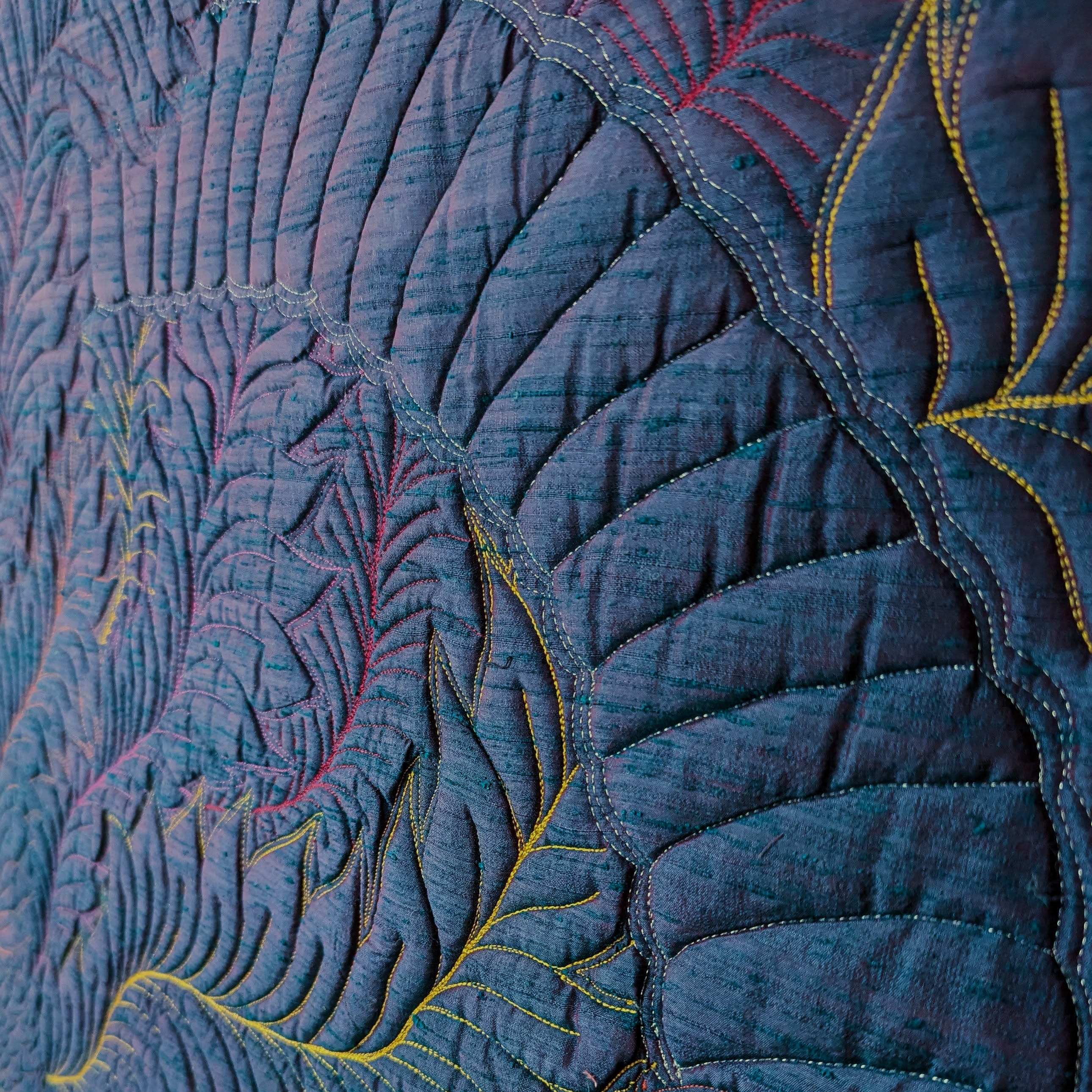
Once I had made those design decisions, I began the actual thread painting and quilting. I used the same general process as I did with my O, beware . . . quilt. I started by thread painting the eye. I layered several different colors of thread on top of each other to create the iris of the eye, which gives depth and plays with the light beautifully, much more so than if I had just used a single thread color. Once the eye was finished, I used silver metallic thread to create the horn (which is not a feature of the typical Quetzalcoatl images you typically see).

I didn’t love the overall look of the horn, but I decided to start working on the feathers and see if that would change how I felt. After I quilted the first couple of feathers, I realized I needed to pick out two sections of the horn and quilt some feathers in front of it while the rest stayed behind it. I hate picking out quilting threads and usually avoid it at all costs, but I knew this would make a huge positive difference. And it turns out I was 100% correct. I was much happier with the overall design of the quilt once I had some feathers quilted on both sides of the horn.

Once the whole thing was quilted, I needed to block my quilt. I set up my ironing board with my full-length wool pressing pad, turned the quilt backside up, drenched a tea towel with water, wrung it out, and then ironed the back of the quilt in sections with the wet towel in between. This is a blocking process I used when I crocheted a sweater several months ago, and it works really well. I then hung the quilt from my photo stand and used rubber covered clamps to stretch the quilt out from the top and bottom corners. In the future, I need to figure out a way to attach clamps on all four sides so that the quilt will dry perfectly flat. But this time I did what I was able to do, and the quilt dried pretty flat.

The quilt needed to finish at 36″ x 36″, but I intentionally created a larger piece because such dense thread painting and free-motion quilting will shrink the overall quilt size quite a bit. I still ended up having to cut off about two inches of fabric from both sides when I squared it all off, but I think that tightened up the overall composition of the piece which was nice.

And then I made a totally rookie mistake with the binding. I was halfway around the quilt when I realized I had started machine sewing the binding on the back of the quilt rather than the front. Normally, I like to machine sew the binding to the front of the quilt and then hand sew the rest of the binding to the back of the quilt. Since I was already halfway around, I decided I was going to use this mistake as an opportunity to practice my machine binding. So I went ahead and sewed the entire binding with my machine. And wouldn’t you know it, the more often you practice something, the better you get! My machine binding is starting to look pretty good these days. And it sure saved me TONS of time! So that’s the whole process for how this quilt came into existence. Reach out with any questions and thanks so much for going on this journey with me.

BMQ YouTube Series – Ep. 30: Patchwork Memories

This quilt is called Patchwork Memories and was created for the Brooklyn Quilters Guild’s fourth outdoor fence show called Recycle Reuse Reimagine. This video takes you through the entire process of making this quilt, from initial idea to hand sewing the binding. Watch the video to find out why this quilt is very special to me!

BMQ YouTube Series – Ep. 22: Amy Fung-yi Lee

I’m so happy that I finally got to interview someone in person again! This is an interview with artist Amy Fung-yi Lee. We chat about her work, her process, and creativity in general. It was very cool to conduct the interview in Amy’s home/studio and to see everything she’s been working on recently.

BMQ YouTube Series: Episode 7 – Shannon (again!!)

In this episode of my YouTube series, I sit down once again with Shannon Reed and discuss creativity and her writing process. Be sure to check out Shannon’s new book that is being released very soon and is available for pre-order now! What are your thoughts about the creative process? Feel free to leave any comments or questions on my YouTube channel or contact me here on my website. And be sure to subscribe to my YouTube channel so you don’t miss out on any of my upcoming interviews and videos!

P.S. This video was recorded almost a year before COVID-19 caused the worldwide lockdowns. Hence our non-social distancing.

BMQ YouTube Series: Episode 6 – Rooftop Water Towers quilt

I just completed a new quilt, and this video takes you from the beginning to the end of the process. And what a process it was! Whew!! I’d love to hear about your own quilting and making process, so be sure to leave any questions or comments here or on my YouTube channel so we can keep the quilting conversation going. And please subscribe so you don’t miss out on any upcoming videos!

BMQ YouTube Series: Episode 4 – Ryan

My latest YouTube video is up! I sit down with Ryan Migge and discuss his creative journey and what he does to get over those roadblocks that keep us from finishing our projects. As always, I’d love to hear from you, so please leave any comments or questions on my YouTube channel or contact me through my website. And be sure to subscribe to my YouTube channel so you don’t miss out on any of my upcoming interviews!

BMQ YouTube Series: Episode 2 – David

In my second YouTube episode, I sit down with my friend David and discuss his creative process and the importance of expressing your creativity no matter what you do for a living. Watch the video to find out the wide variety of outlets David uses to express his creativity. I’d love to hear from you, so please leave any comments or questions on my YouTube channel or contact me through my website. And be sure to subscribe to my YouTube channel so you don’t miss out on any of my upcoming interviews!

Creating a Quilt: Part 7 – The Finishing Touches

All right, folks! If you’ve been following my “Creating a Quilt” series, you’ve seen my process from thinking of an idea all the way up through the quilting design. There are only a few details left, but I assure you they’re just as important as all of the rest!

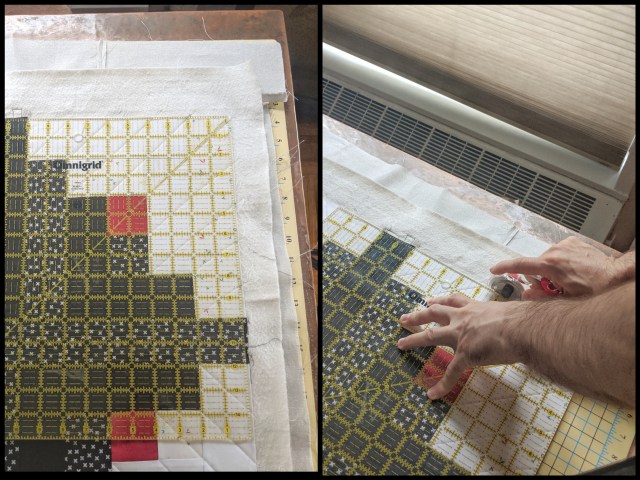
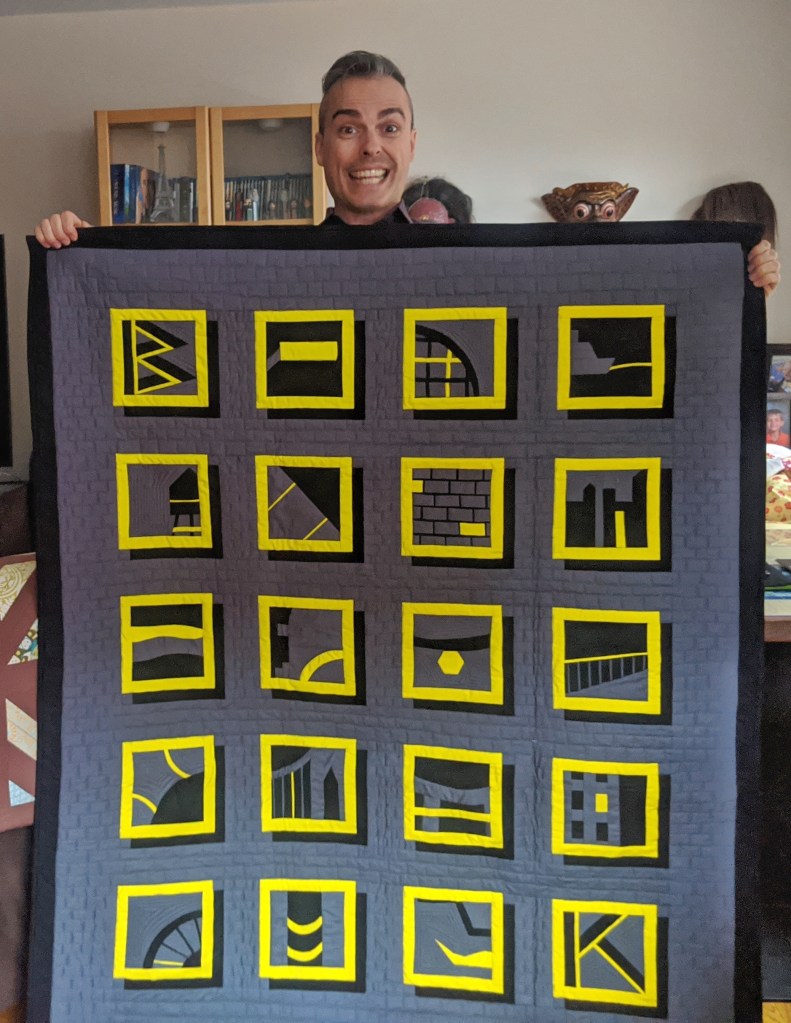
First, I need to trim off all of the extra batting and backing and square up the whole quilt. When I square up a quilt, I try to find some element of the quilt that I can use to measure with that will get me an even trim around the whole quilt. In this case, I used the outer black border. I then place the largest square ruler I have in one of the corners of the quilt, line it up so I’m cutting off an even amount on both sides, and trim up the right-hand side of the ruler and then over the top. Then I use my long 24″ ruler to continue the cut all the way to the next corner.

I tend to switch between my long ruler and my square ruler, but you could just as easily use your long ruler all the way around once you’ve decided on the amount you want to trim. Ideally, I trim as little of the actual quilt top as possible while still making sure that no batting will be seen once I attach the binding.

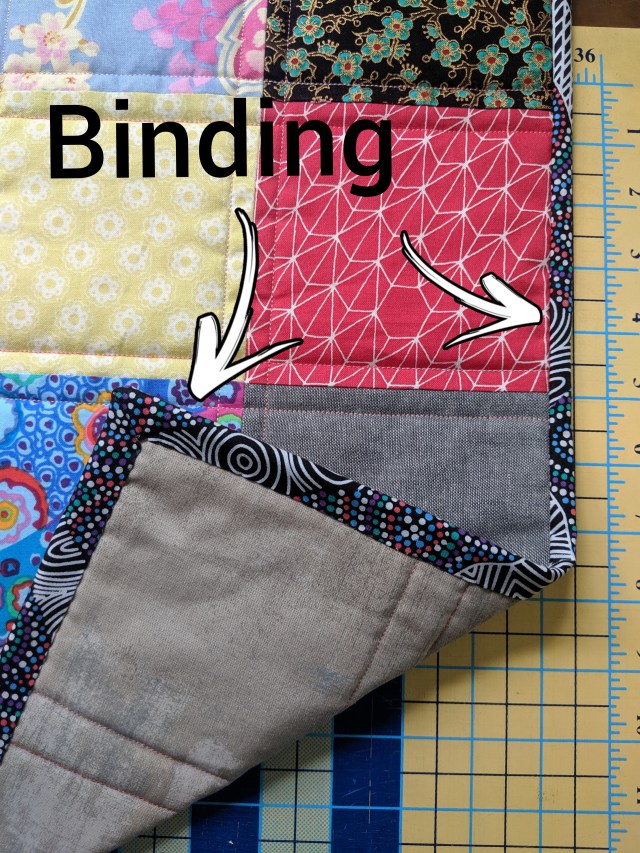
Speaking of binding, that’s the last important design decision that must be made. Actually, before even deciding what kind of binding you want, you need to decide if you want to actually bind your quilt or use a facing instead. Binding a quilt is definitely the most common way to cover up the raw edges of a finished quilt, especially quilts that you want to snuggle under. A binding creates a lovely frame around your quilt top while making sure all of your raw edges are securely enclosed. Depending on what kind of fabric or print you choose for your binding, it can either blend in or really pop out.

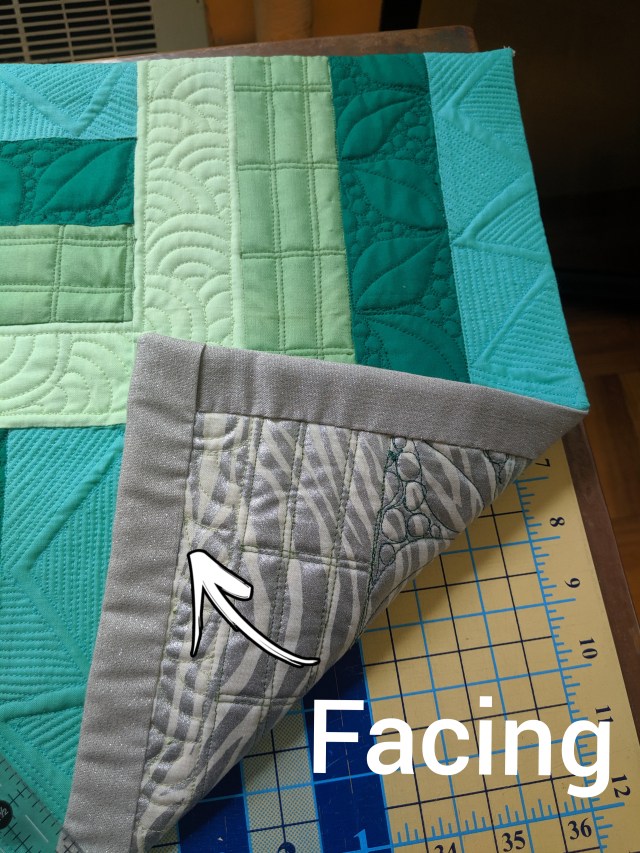
I’ve also used facing for several of my quilts, though usually for quilts that are meant to hang on walls. When you face a quilt, you basically pull the raw edges over to the back and cover them with a different kind of binding that won’t be seen on the front. This gives the quilt a frameless look. I really love facing my quilts when I want the viewer to imagine my quilting designs continuing off of the quilt.

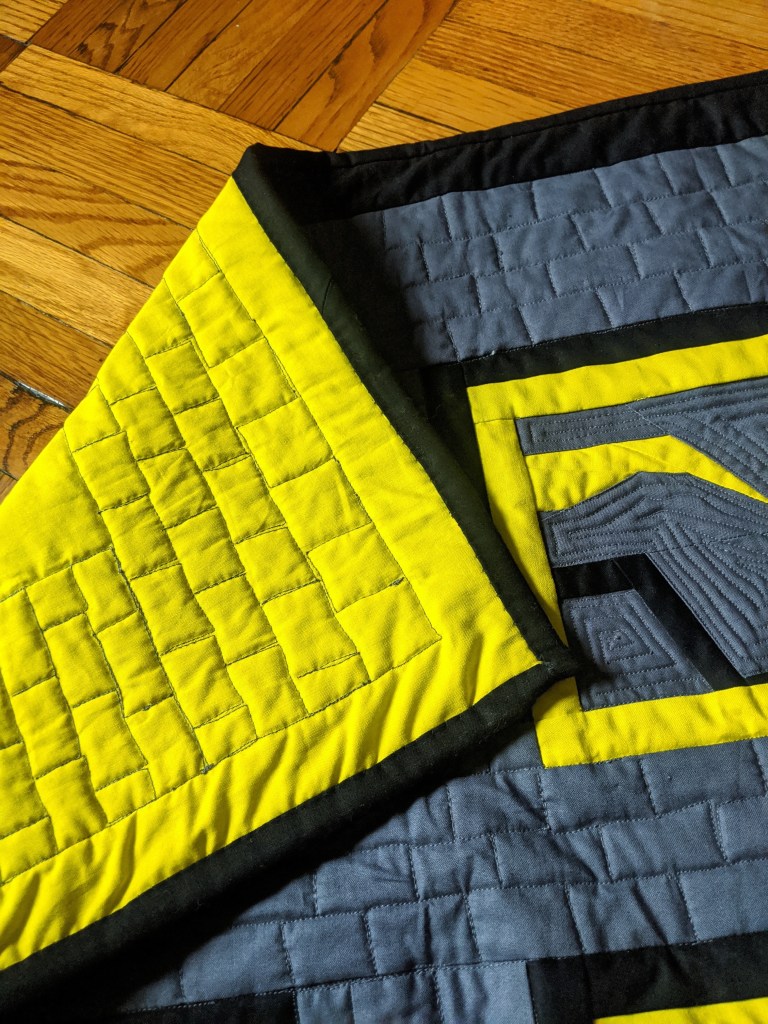
In the case of this quilt, I had already decided to add the black outer border as a solid frame, so I decided a simple black binding that blended in would be the perfect way to finish it. I generally machine sew the binding onto the front of the quilt and then hand stitch it to the back. I really love how it looks on both sides when I use that technique.

Once the last stitch of the binding has been sewn, I usually consider my quilt D-O-N-E. However, when a quilt is going to be displayed, it needs a couple more elements added to it — a hanging sleeve and a label. There are different ways to display your quilt, so if you’re entering your quilt in a show be sure to read the guidelines for how that particular show wants you to attach a hanging sleeve. I went ahead and used some more scraps from my quilt to construct this hanging sleeve. I like how it kind of blends into the back, though I don’t always care so much about that since it won’t normally be seen by anyone.

As for the labels, I like to make mine by hand. I include the name of the quilt, my name, my social media handle, my location, and the date the quilt was completed (I just use the month and year). Because I’m not selling my quilts at this point, I’m not too worried about how professional my labels look. I’m kind of digging the homemade vibe they have right now.

One thing you may remember from one of my earlier “Creating a Quilt” posts is that I was planning on calling this quilt “Dear Brooklyn,” as an homage to the Dear Jane quilt pattern. However, as I started actually making the quilt, I realized my quilt really looked nothing like a Dear Jane quilt and instead my blocks looked more like Polaroid snapshots. So one of the last design decisions I made was to change the name to “BK Snaps.”

And now my quilt is officially finished. Huzzah! I really loved the entire process of creating this quilt, and I’m so glad you came along on the journey with me. I’d love to hear about your own quilt-creating process or any sort of creative process you use whenever you’re crafting anything. Please leave comments or questions in the Comment section below, so we can all learn from each other and continue to thrive as a creating community! Happy crafting!!

BMQ YouTube Series: Ep. 01 – Shannon!!!

I’m finally premiering the first episode of my Boy Meets Quilt YouTube channel. I sit down with my dear friend Shannon Reed (@knittingchick), who talks about her crafting history and everything she loves to do. Please check it out and be sure to Subscribe if you want to see more. Also, ask questions and make comments so we can share our love of all things crafty!!