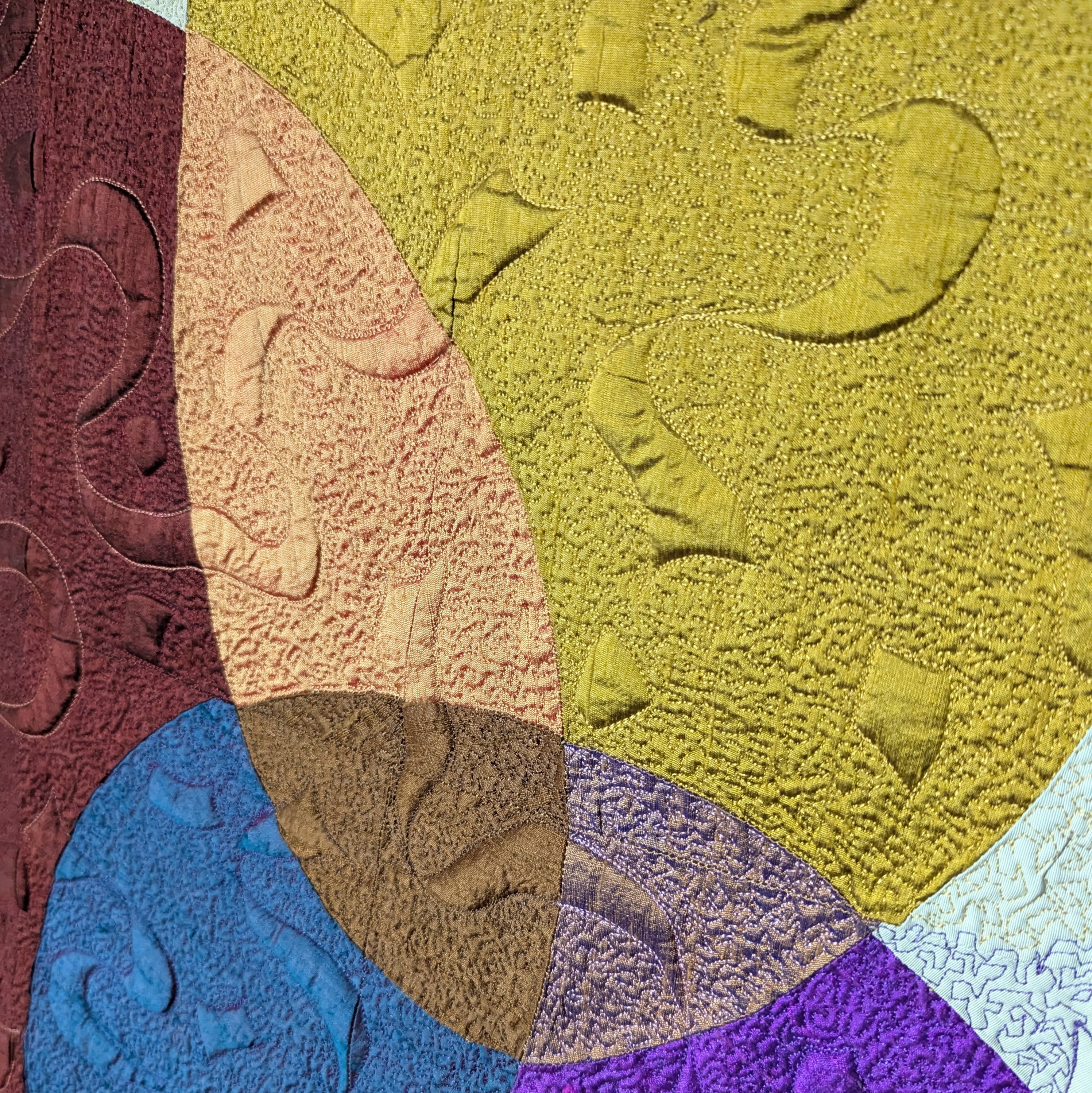
Colored Lights & Confetti


I have become obsessed with dupioni silk over the last few years, and this latest quilt is my most ambitious application of this gorgeous fabric so far. I’ve always admired this nubby, raw-looking silk that shimmers in the light and, depending on how it’s woven, can even change colors when you look at it from different angles. But due to its price and my lack of experience, I shied away from using it in my quiltmaking process until I felt I had mastered enough techniques to not make a total mess of it.

Back in September of 2023, Shannon Reed and I made our annual trek to Oaks, PA for the Pennsylvania National Quilt Extravaganza to ogle the array of gorgeous quilts and, of course, to shop. Country Keepsakes was one of the vendors, and they had an incredible display of dupioni silks and I couldn’t stop thinking about them as we continued wandering through the show. Before we left, I bought two yards of fabric that I eventually turned into a whole-cloth quilt entitled: Behold My Beauty and Weep. (Click this link to read more details about the quilt pictured below.)
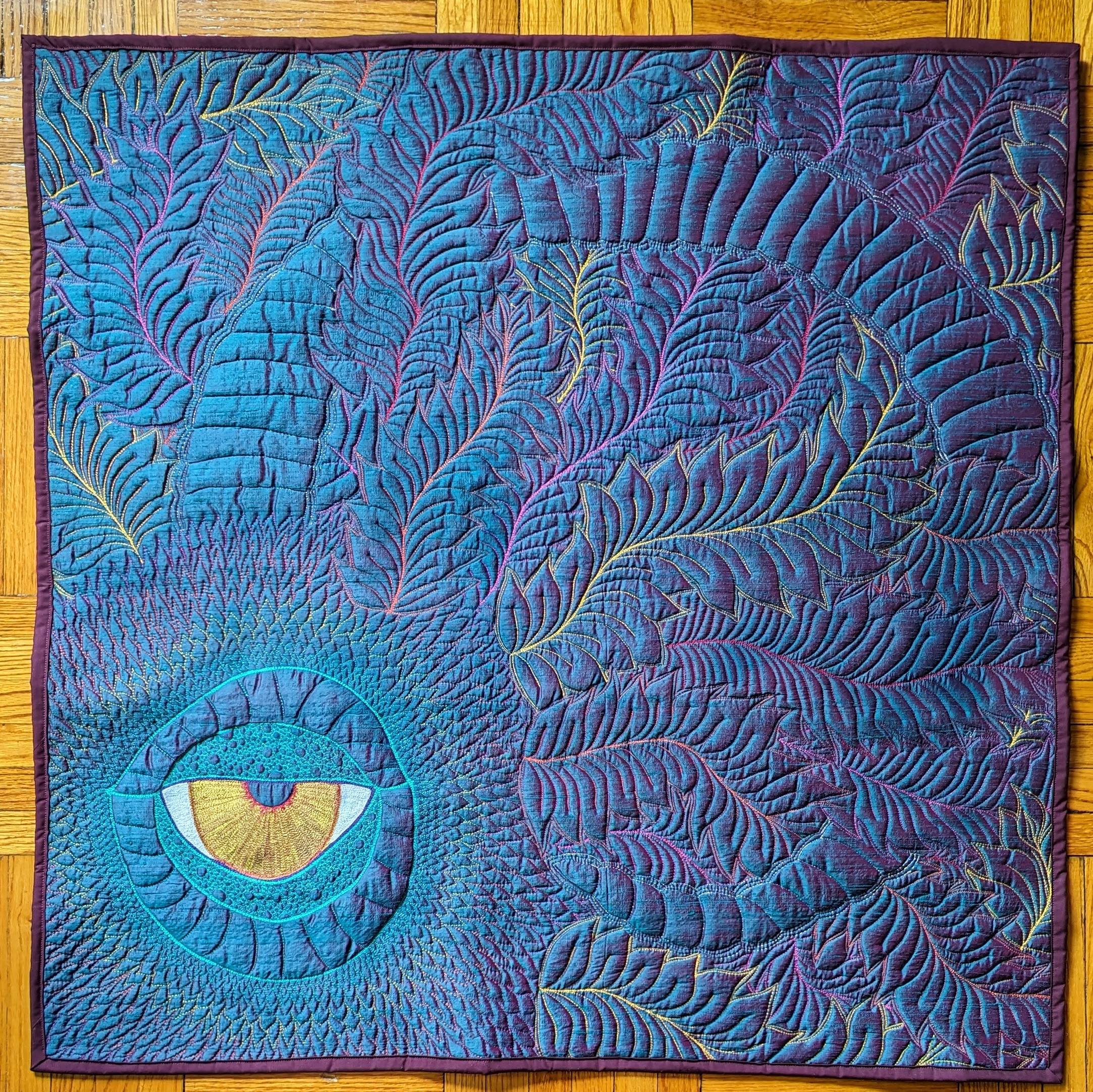
I absolutely loved working with this fabric, and I quickly decided I needed more. So when Shannon and I returned to the Extravaganza this past September, I had already planned to purchase another two yards of fabric for another whole-cloth quilt. And then, as luck would have it, I won a $50 gift certificate from the door raffle. Not only did I buy the two yards of silk I originally wanted, but I then added a bunch of fat quarters to my purchase, not sure what I would do with them but so excited to add them to my stash.

Also around this time, I realized I needed to think of an idea for the Brooklyn Quilters Guild biennial quilt show that would be happening at the end of April 2025. I decided pretty quickly that using my silks would be key in whatever design I came up with. After mulling it over for several days, I decided to try to up my transparency-and-curves-piecing game from when I took a Carolina Oneto workshop a few years prior.

Using Google Docs, I sketched out a few rough ideas of what I had in mind and finally landed on my final design.
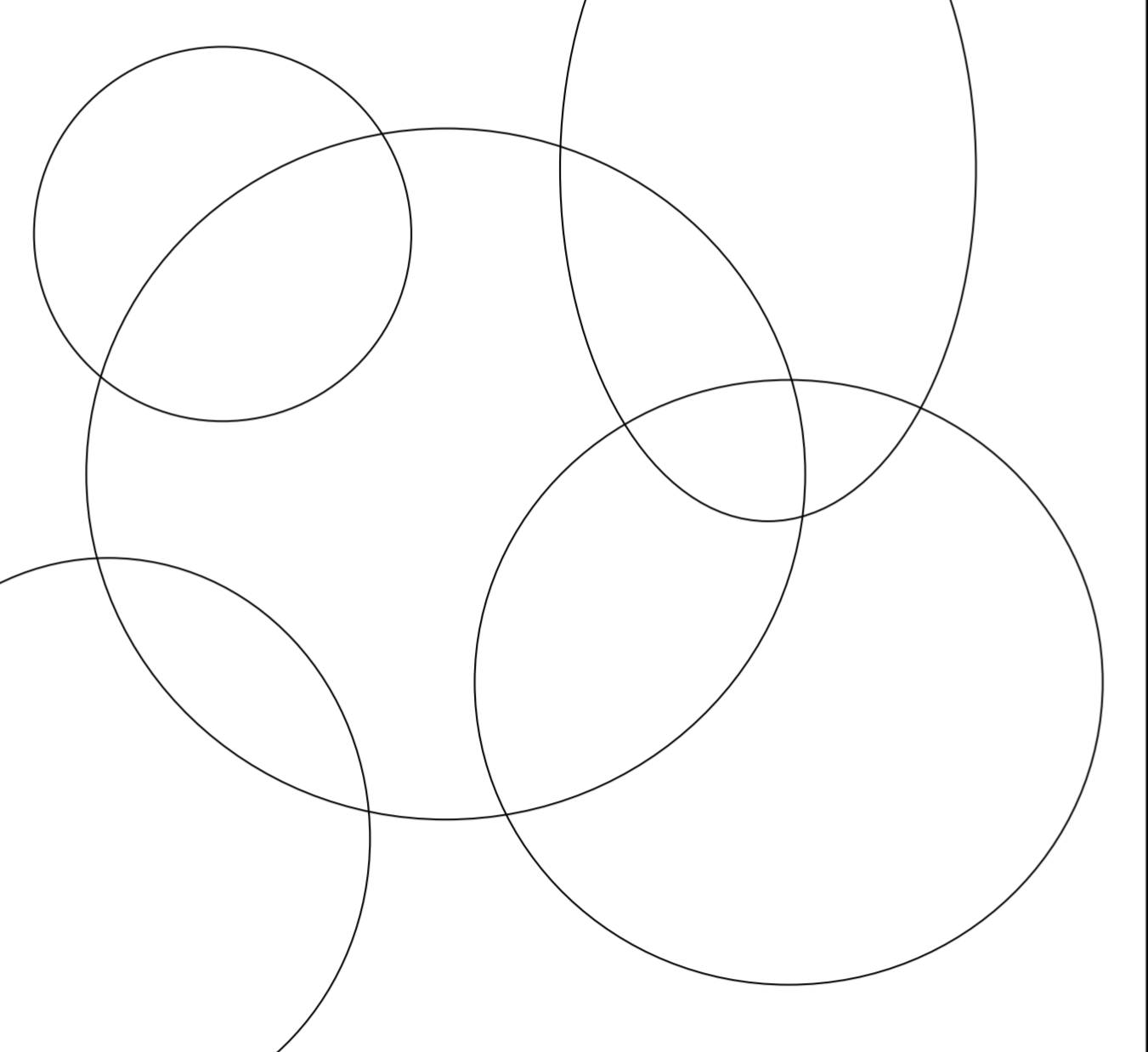
Then I gathered all of my dupioni silks and started figuring out how they were going to work together. This is the point where someone who actually plans ahead would have exactly the right colors to make the transparency effect work perfectly, but I am generally not that person. I couldn’t really afford to buy more fabric, so I just worked with what I had. I imagine a color theorist will not approve of my final layout.

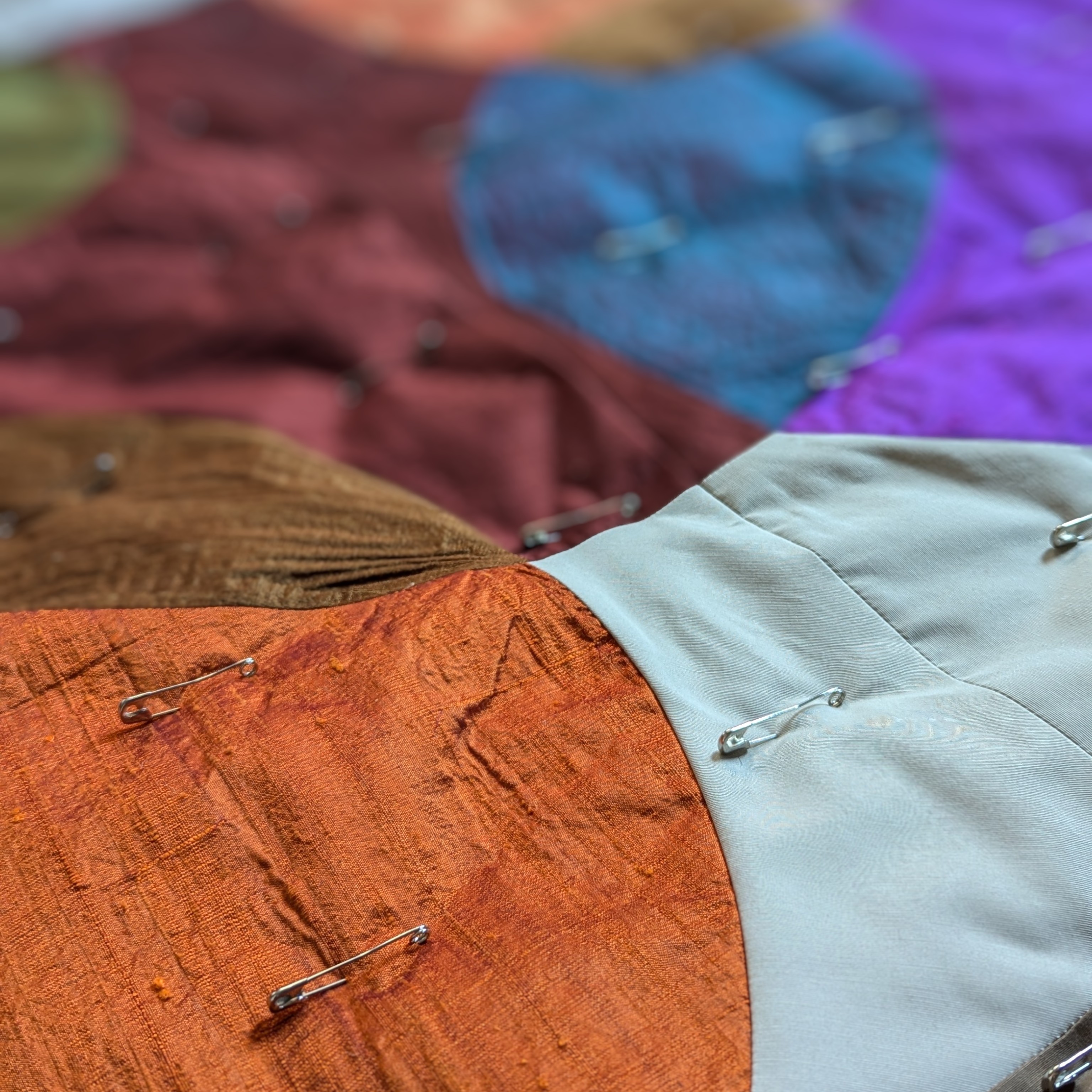
Because I was going to be piecing all of these silks together, I backed it all with a light-weight fusible webbing to prevent fraying. Dupioni silk frays like crazy, so this is a necessary step unless you want to pull all of your hair out during the cutting and sewing process. I then used the techniques I learned from Carolina Oneto’s workshop to recreate my digital sketch into a small quilt top.

Then it was time to figure out how I was going to quilt it. If you’ve read my previous posts, you know I love free-motion quilting, so that was a no-brainer. I am a big believer that the right quilting design enhances the quilt top, so I had to think about what would make the quilt top pop instead of distract from the beautiful silks. After staring and staring for days at my quilt top, I kept thinking about a dance hall with colored lights reflecting on the walls, which then made me think about a fancy New Year’s Eve party and the moment it strikes midnight and confetti and streamers begin falling from the ceiling.
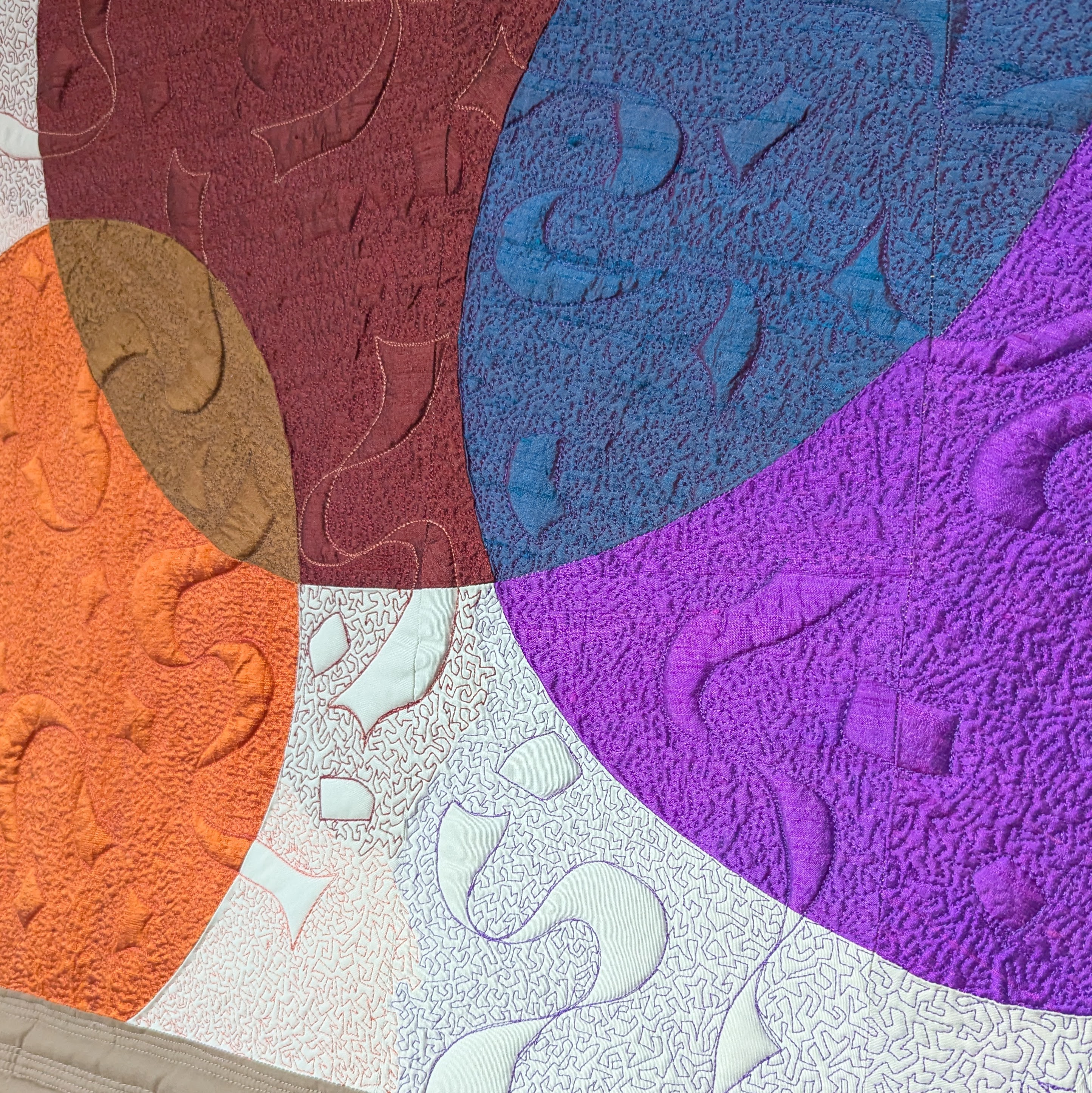
Using shiny polyester thread, I quilted a sharp stipple pattern over the entire quilt top, interspersing confetti and streamer sections that puff up next to the densely quilted areas. I then quilted straight lines in the border to evoke a wooden frame effect surrounding the center design. And thus Colored Lights & Confetti was complete.
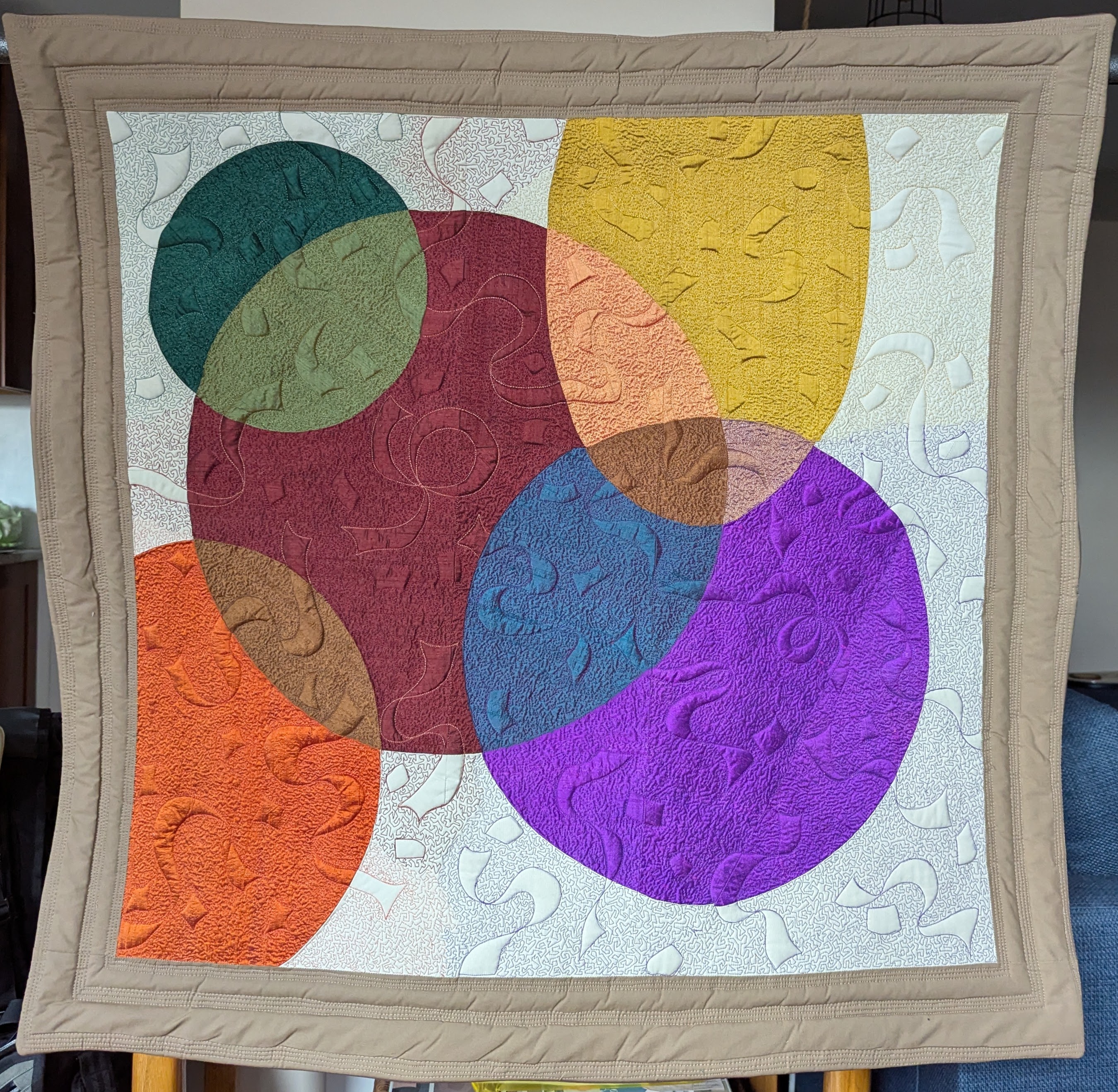
This will be on display at the Brooklyn Quilts! 2025 show on April 26 & 27, along with my what are you afrAId of? quilt which I posted about earlier this month. If you’re in the New York area the last weekend of April, you should come out and see the over 200 beautiful quilts that will be on display, along with raffles, vendors, workshops, and more. Feel free to reach out with any questions or comments, and keep making!
what are you afrAId of: Quiltmaking and Artificial Intelligence

Back in early 2024, all I was hearing about was generative AI and how it would change the world. There has been so much debate about whether the changes would be good, bad, beneficial, destructive, or all of the above. This debate has been quite intense in the art world, though maybe not so heavily discussed in the quilting world. Because of my day job as a transcriber, I have been well aware that technology will be replacing me at any point, but I had never really considered how it could affect my creative endeavors until I started seeing everyone’s experiments with image generators. I decided to find out for myself just how afraid or excited I should be about using this cutting-edge technology in combination with a millennia-old craft and art form.

The Brooklyn Quilters Guild had an outdoor fence show in the autumn of 2024 that was titled The Stories We Tell: Folklore, Fantasy, and Folly! I almost immediately had an image come to mind when I started thinking about quilt ideas for this show. I imagined a person staring into a cracked mirror. The reflection’s arm is reaching through the mirror holding some sort of object representing power. Kind of a “Snow White/Through the Looking Glass/Garden of Eden” type deal. The problem with this idea was that I do not have the artistic skills necessary to draw the kind of image I wanted to create, so what a perfect time to dip my toe into the world of generative AI, right?

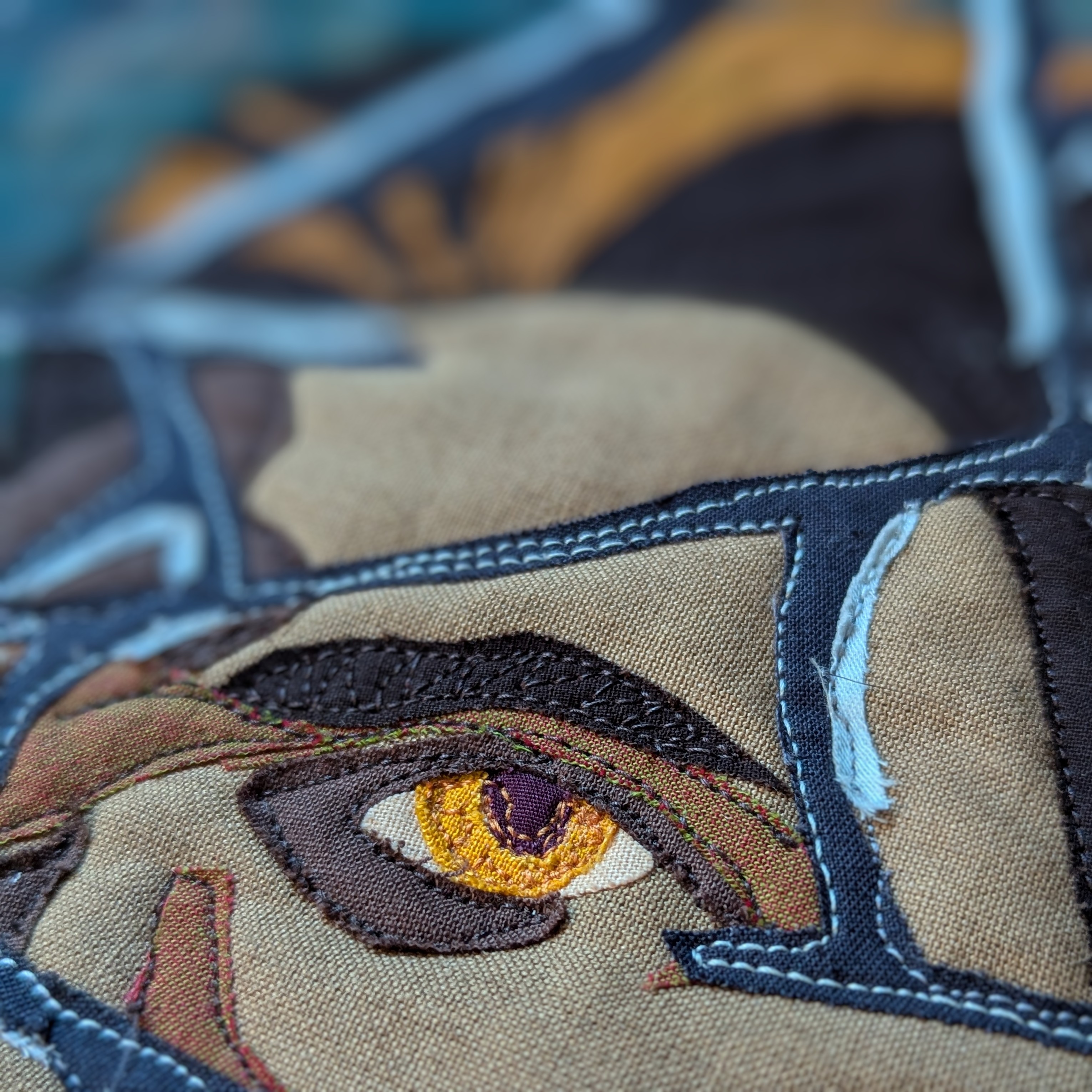
I decided the best way to transfer what I was imagining into an actual quilt would be to use the raw-edge appliqué technique. Interestingly, this technique already takes advantage of quite a few forms of technology that weren’t available to quilters of yore. You generally use double-sided fusible interfacing if you’re creating a raw-edge appliqué design. Many folks use photographs as the foundation of their quilt images. Then you can use a printer or a projector to trace the portions of the photograph into the different sections you’ll eventually appliqué together. So why not add a little generative AI into the mix? It’s actually not that big of a leap when you really think about it.

Next, I had to choose a program to create the image. After a relatively quick Google search, I opted for Microsoft Image Creator (which is now called Microsoft Designer). I chose this program because it was free and offered unlimited prompts (I’m not sure if that’s still the case today).

I entered my first prompt:

gilt frame antique mirror with shattered glass reflecting the image of a person and a hand reaching out holding an apple

I proceeded to tweak the prompt 12 more times. I’ve posted all of the resulting images below.

My final prompt was:

in the style of an oil painting, a nonbinary person staring into a shattered gilt frame antique mirror set at an angle. A completely separate hand holding an apple coming out of the mirror

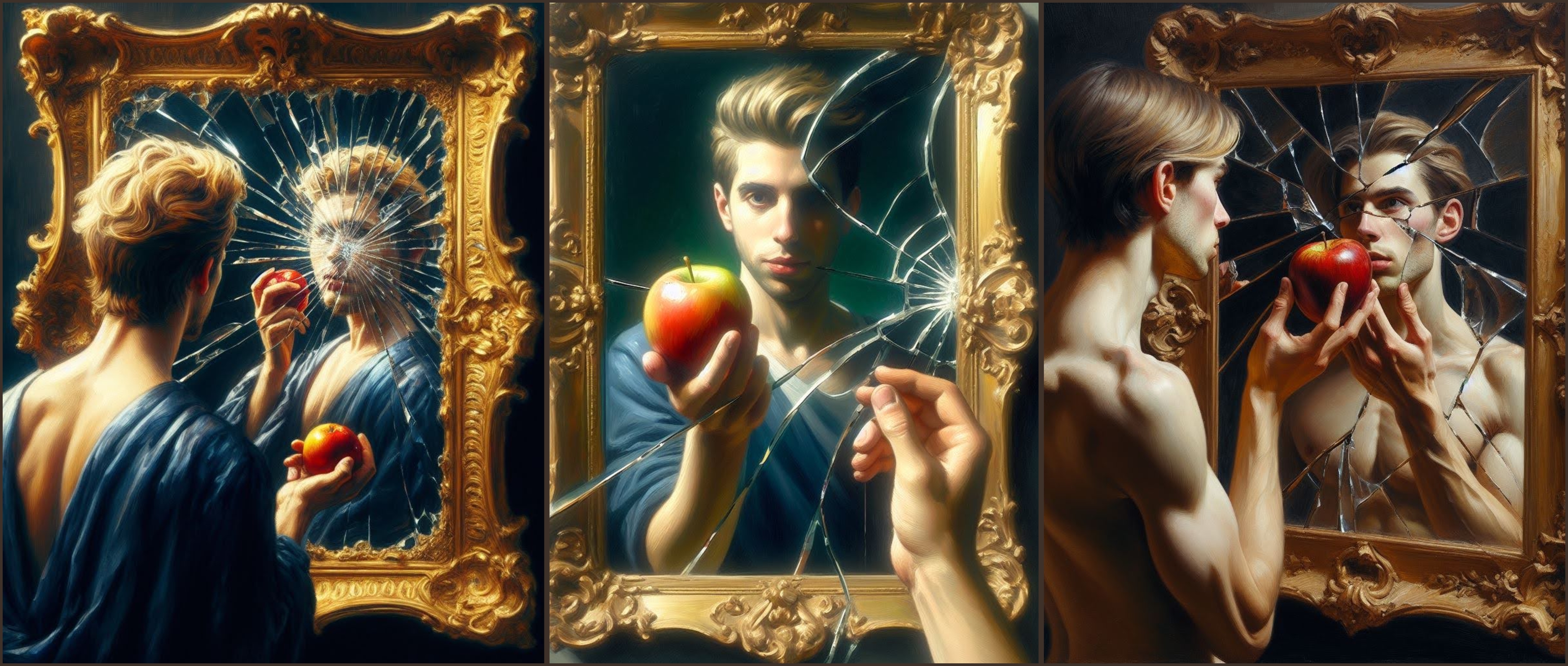
These were the three images that came closest to what I was picturing in my mind.

While none of these images were exactly what I wanted, I decided the one on the far right was close enough and I could make changes as I was putting it all together. You may also notice that all of the figures are holding an apple. I had no plans to use an apple as my symbol of power, but “flame-like blob of power” was a little too abstract for the image generator.

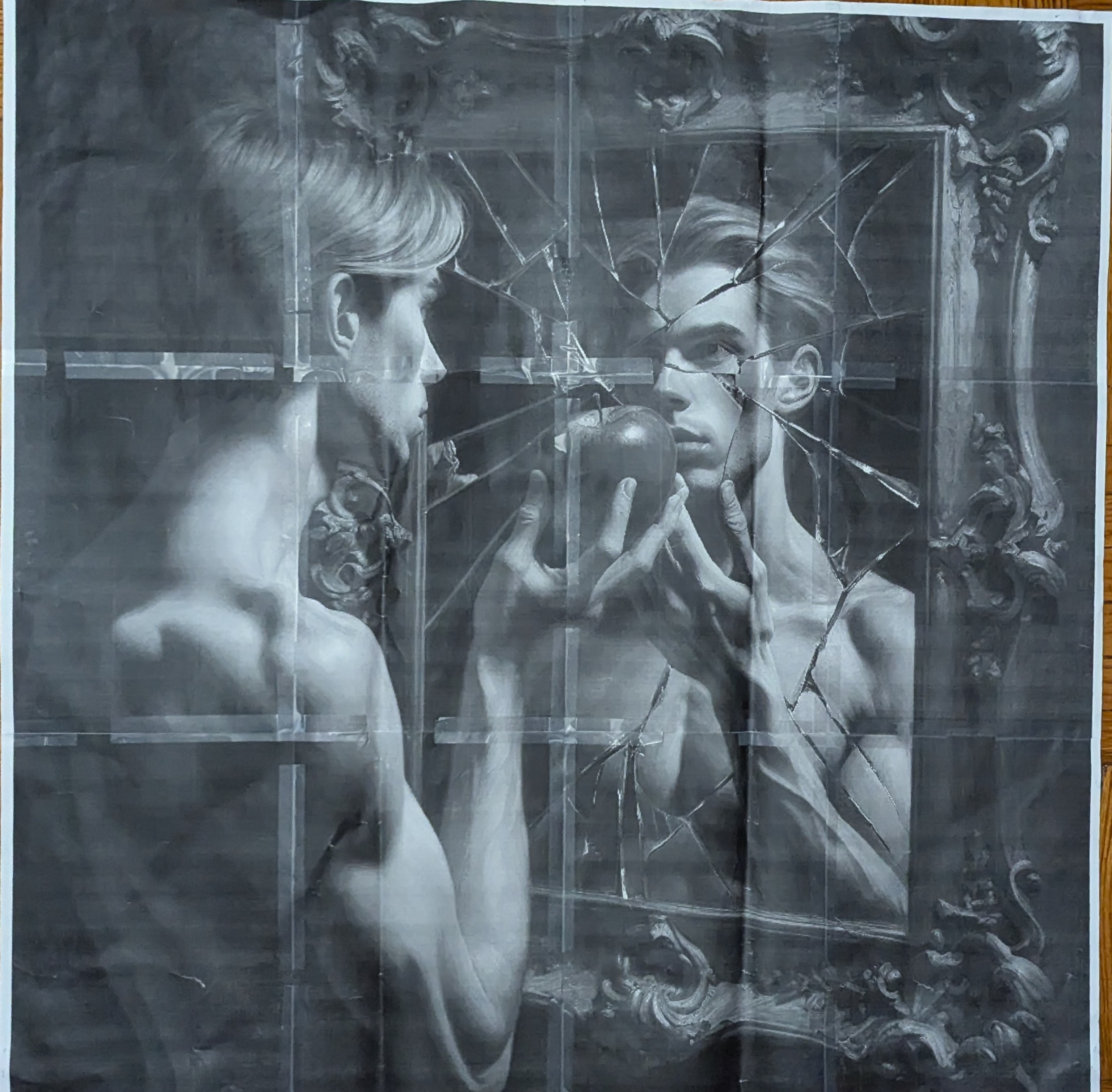
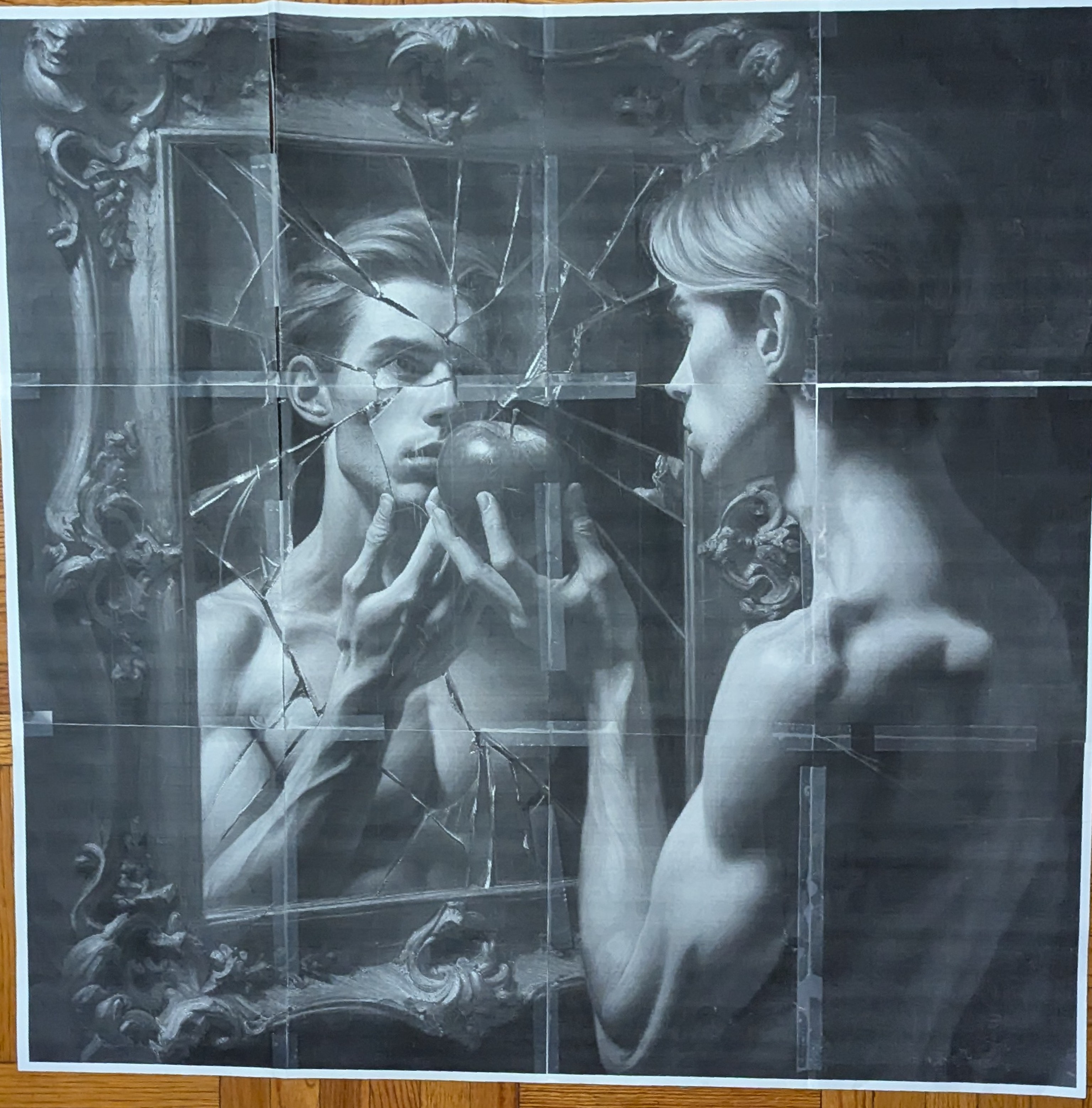
Once I chose my image, I used Blockposters.com to enlarge the image to the size I wanted and then printed it out on my black-and-white printer. And because I was using the raw-edge appliqué technique, I needed to mirror the image and print out that version as well since everything you trace on the back of your fused fabric will reverse once you start putting all the pieces together. I suppose I didn’t have to print out the non-mirror image, but I found it very useful to have the full-sized image on hand as a reference when I started putting all of my many bits of fabric together.

I won’t go into all the nitty-gritty details of how one creates a raw-edge appliqué quilt (there are tons of online videos/workshops/classes if you’re interested), but I will say this was by far the most ambitious raw-edge appliqué quilt I’ve ever attempted and it was exhausting. I don’t know how all y’all do it! Respect.

This is how my quilt turned out.

You can see that it looks fairly different from the final AI-generated image I chose. I intentionally tweaked the design as I was cutting the little bits of fabric out and deciding what details from the original image could be ignored and what details needed to be changed. While I can genuinely say the final product is my own design, I never could have gotten to this point if I hadn’t used the AI-powered image generator.

So after all of this, how do I feel about using AI in my making process? I’d say I’m pretty jazzed about it. For someone who has limited drawing skills, I am looking forward to experimenting further with AI image generators used as a tool to help me create more projects like this one. From an ethics point of view, I do believe one should be transparent about how AI was used in the process of creating a work of art, but I believe it can be used as a transformative technology to help create fascinating results.